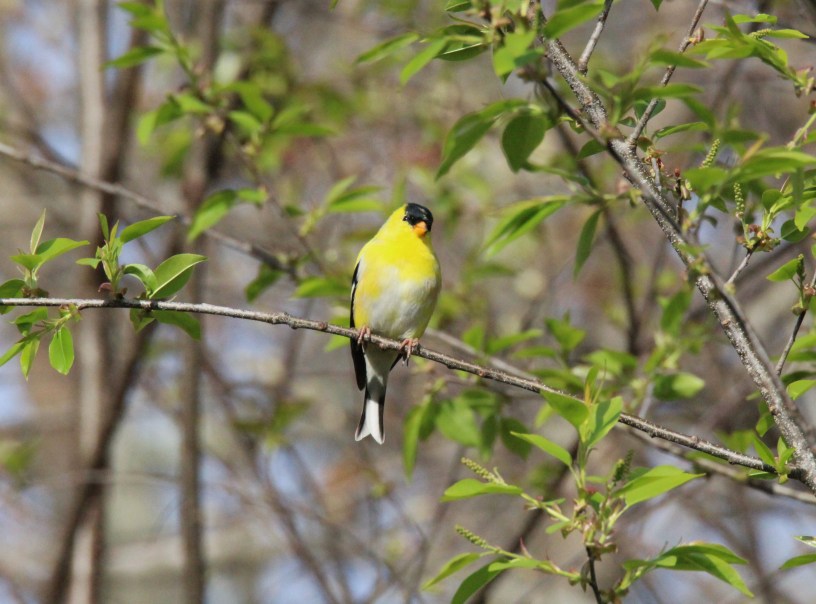
Spring migration in Western Mass is so much fun for bird-lovers! It is so interesting to see how the numbers of migrating birds are fluctuating this week. According to Cornell’s Migration Dashboard, 579,300 birds crossed into Hampden County on Tuesday night (April 24, 2024), but no birds came here on Wednesday. They were all in Texas! 3,942, 900 birds moved through Anderson County in Texas Wednesday and over 4 million passed through last night! Crazy! I clearly NEED to go there to bird! 26,500 birds arrived here last night. Interestingly, both states had 14 species. We birders in Massachusetts are seeing lots of yellow birds now. I see many people posting about how their American Goldfinches have arrived. Most Goldfinches are year-round birds in our local area. You can learn all about goldfinches in my earlier blogs. For now, I thought it might be neat to help you identify some of the yellow birds you could be seeing this week! I use location, and time of year, appearance, sounds, and behaviors to help me figure out which yellow birds are in my backyard and local birding spots now.
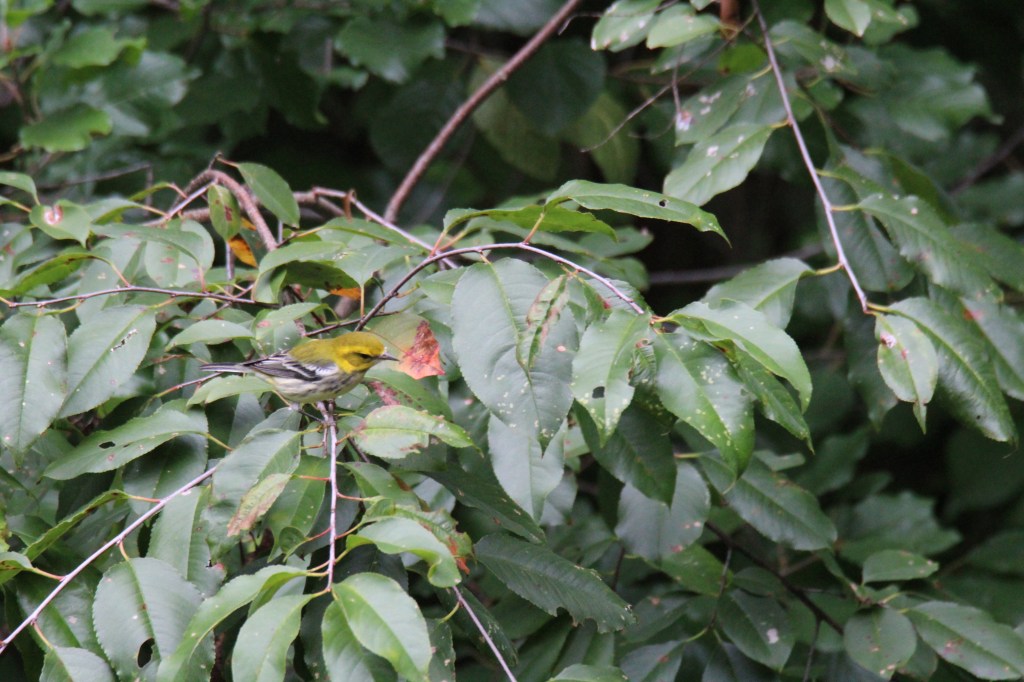
Wilbraham
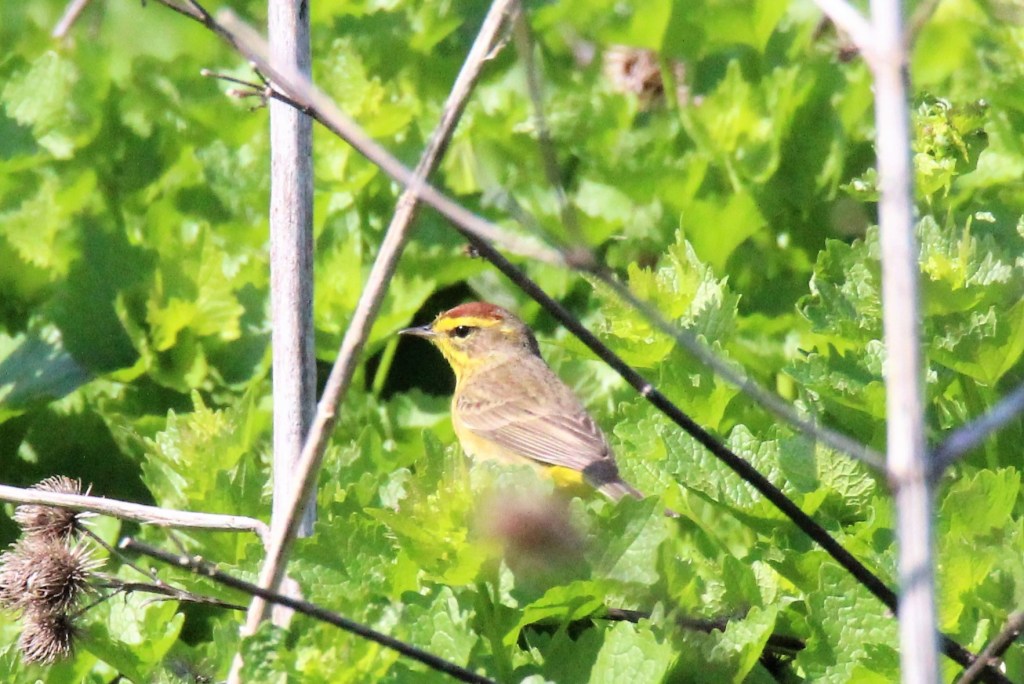
Longmeadow
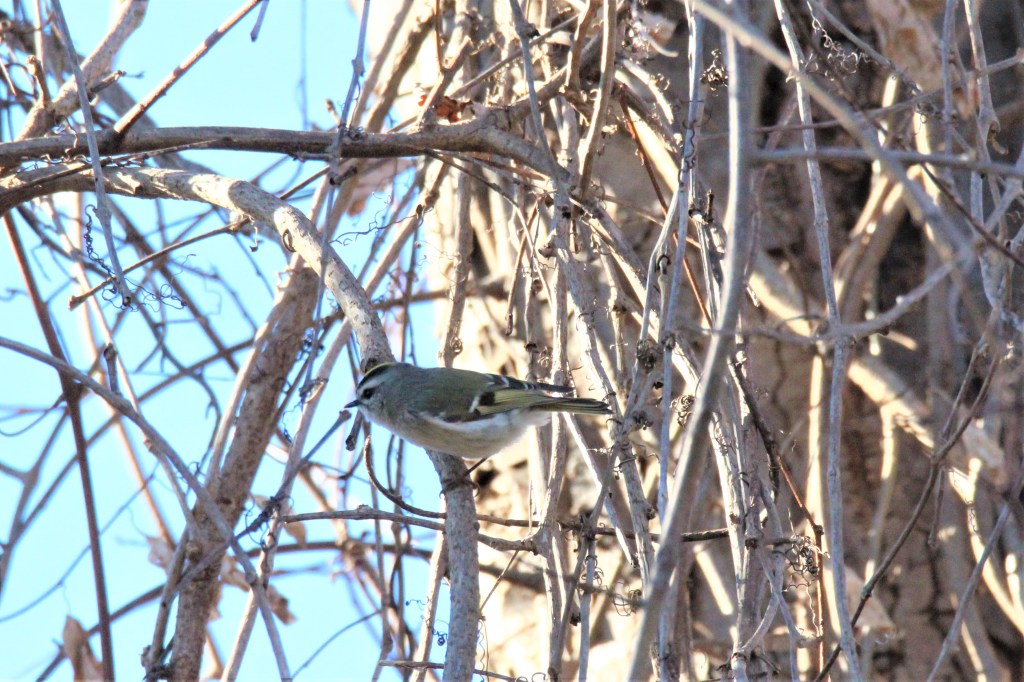
Longmeadow
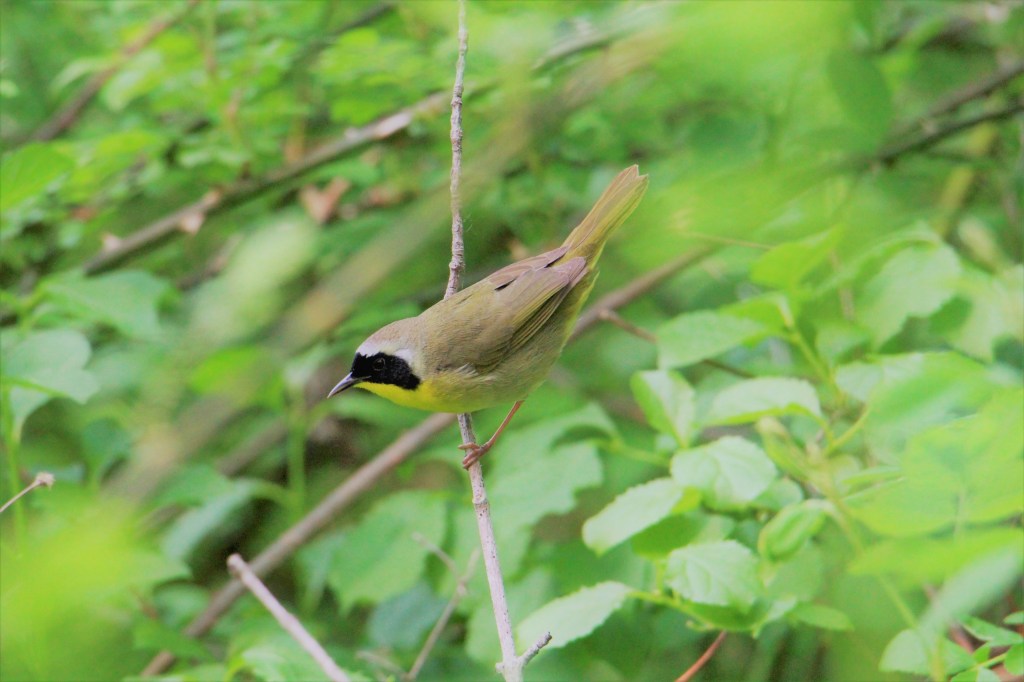
Longmeadow
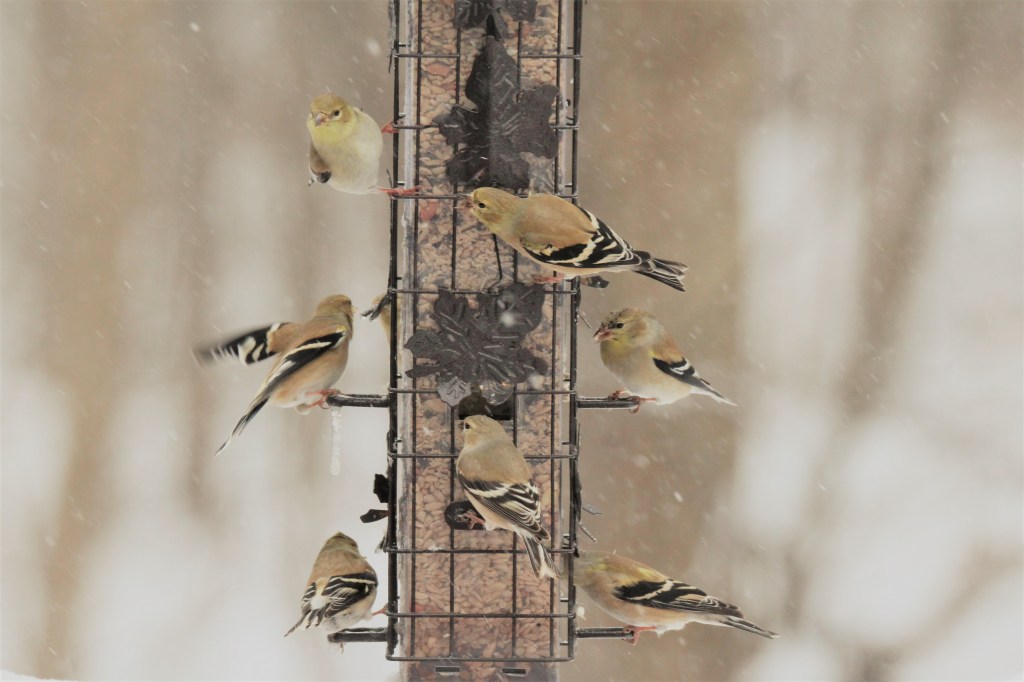
Wilbraham

Longmeadow
I spend a lot of time birding in my yard and local area, so I know which birds are common when. You can do this too! It makes it easier to spot the visiting migrants. First, where am I seeing the bird? Location is critical as many birds are only seen in certain parts of the world. Consider the 2 goldfinches below. They are both yellow and black finches, but one is a local American Goldfinch and one is a Lesser Goldfinch I saw in LA. This bird would be ultra rare here in Mass. Next, when am I seeing the bird? Since I was in Florida in January, the Pine Warbler below was a likely ID. The gorgeous Cedar Waxwing below was in South Carolina in early April. We do get some Cedar Waxwings and even some Bohemian Waxwings (still on my bucket list) in Hampshire County in early April, but they usually arrive later in Hampden County. Sometimes, birds throw out the rule book and end up in strange places at strange times. Normally, no one in Mass would be seeing a Painted Bunting like the one from Florida below, but someone in Whately had one visiting her feeder on April 23!
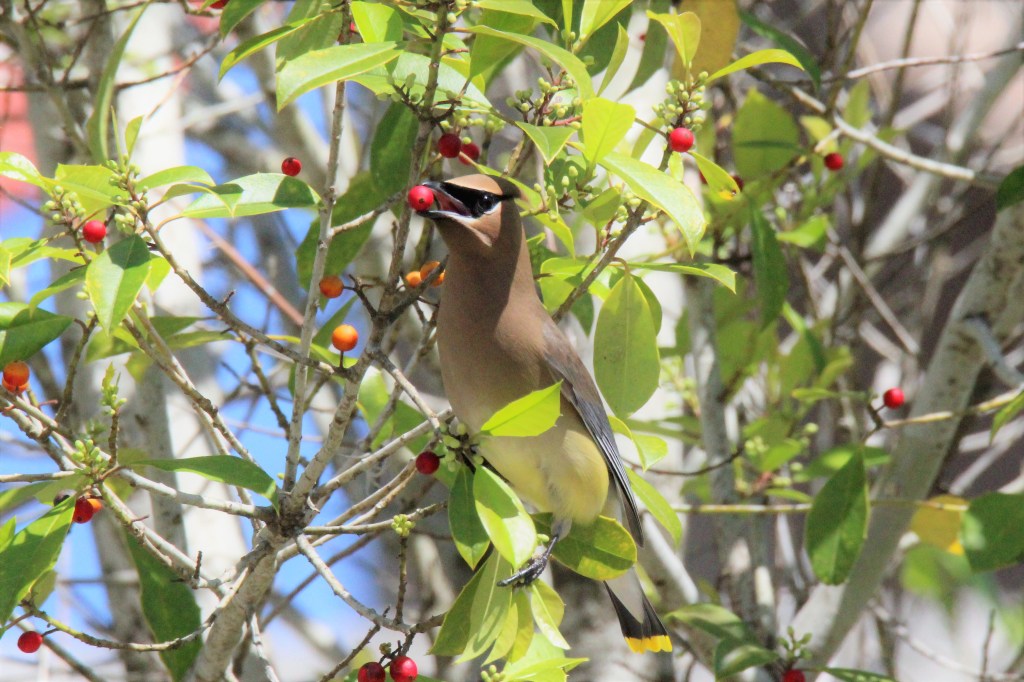
Hilton Head
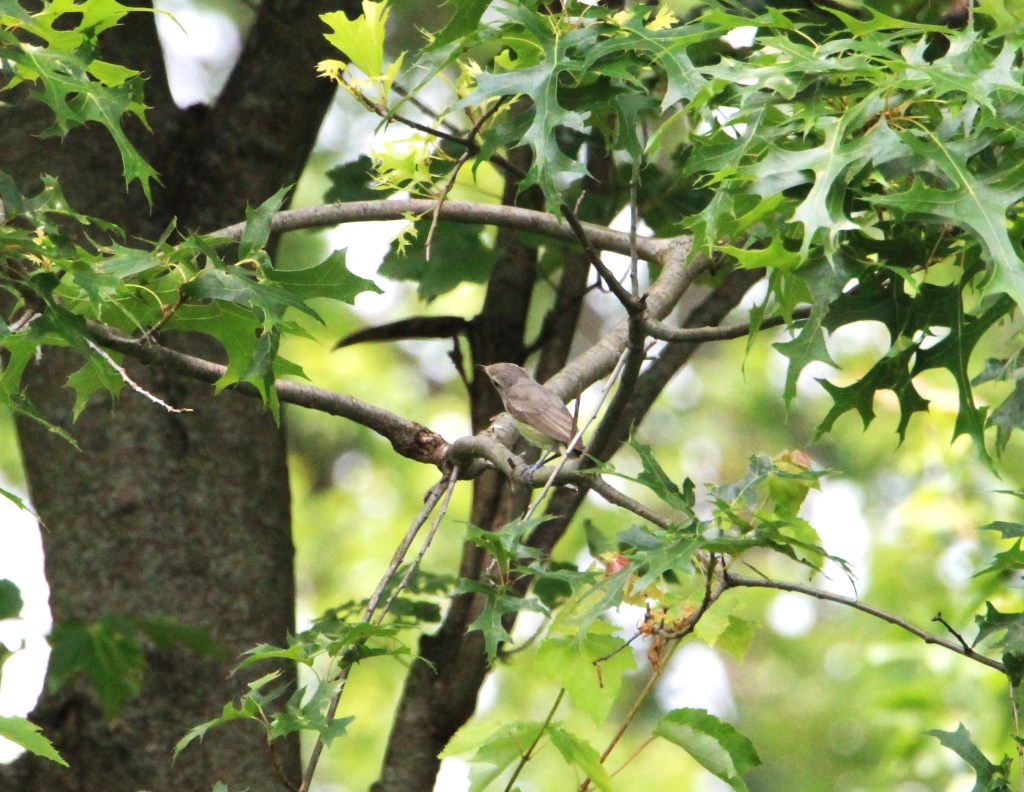
Pennsylvania
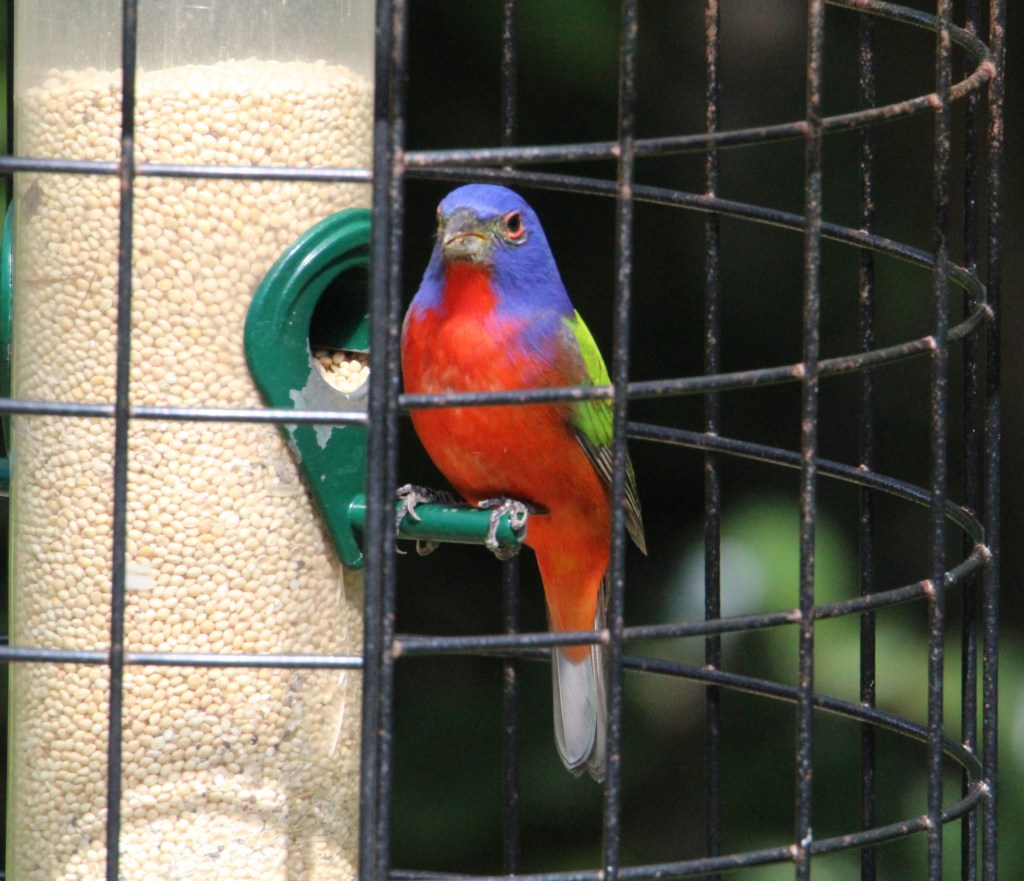
Florida
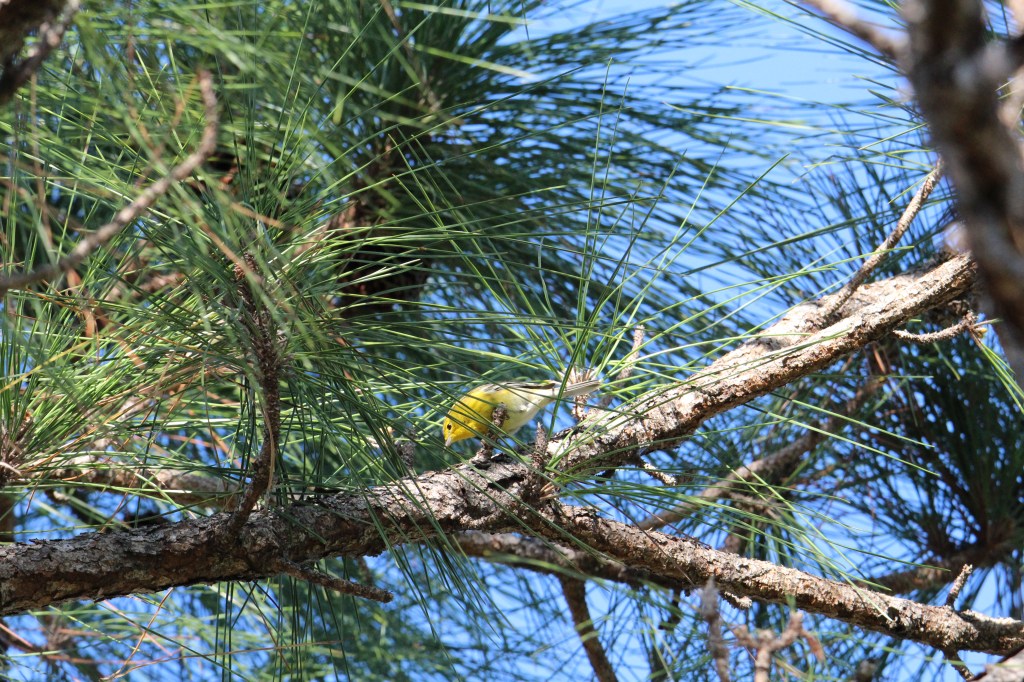
Florida
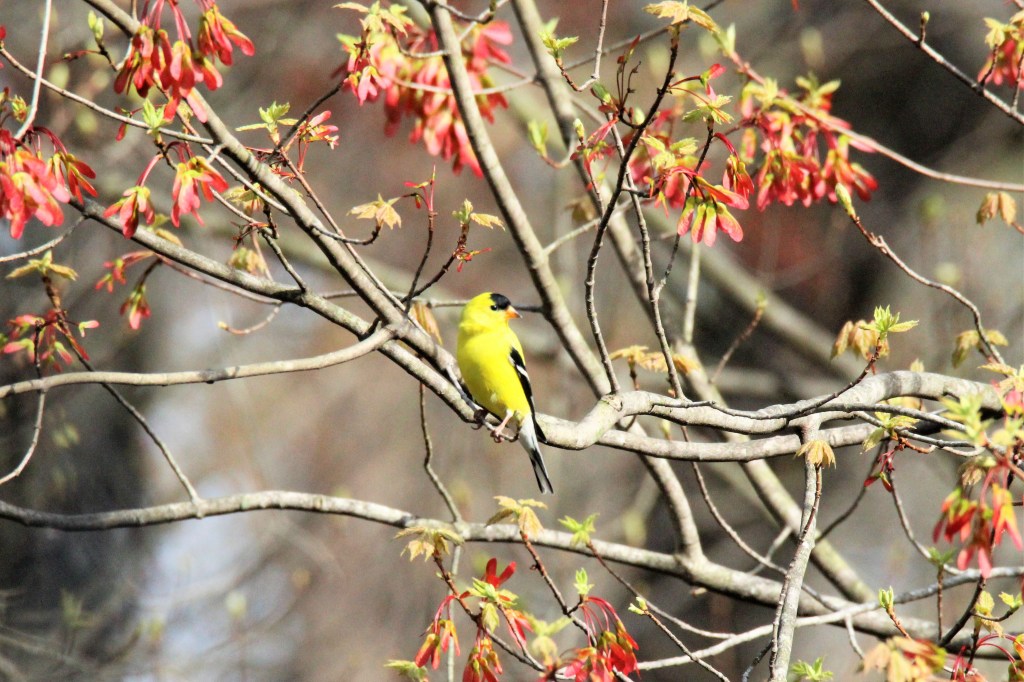
Wilbraham
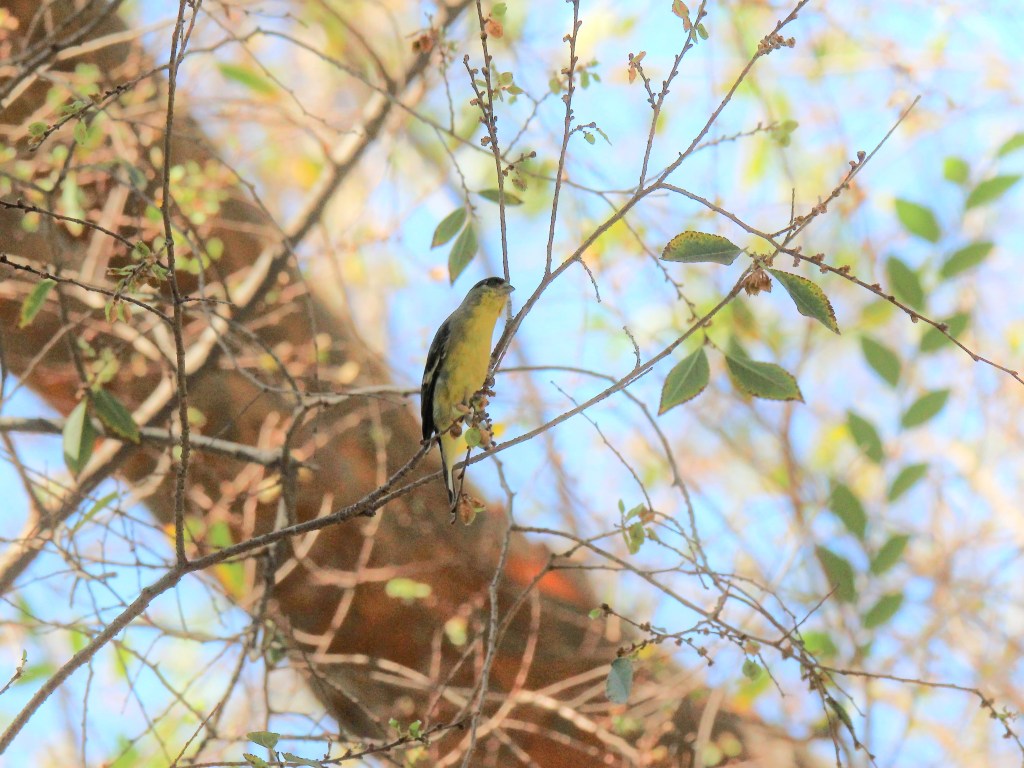
California
Now, what does my bird look like? Size and shape help you to narrow down your options. Ruby and Golden-crowned Kinglets are tiny little birds compared to the small warblers, medium-sized finches, and larger female Baltimore Orioles or Scarlet Tanagers. Kinglets look like little, round puffballs, while vireos and goldfinches are longer and thinner-looking. By now, birds are done molting, so they are wearing their beautiful spring colors, especially the breeding males. I use these colors and feather patterns as well as beak size and shape to single in on a bird family, such as the finches. For example, goldfinches have a larger, orange, conical, beak used to crack seeds and black wings with 2 white wing bars. Warblers will have smaller, tweezer-shaped bills to dig insects out of crevices and different colored wings with muted wing bars. Compare the songbirds below to see some of these differences.
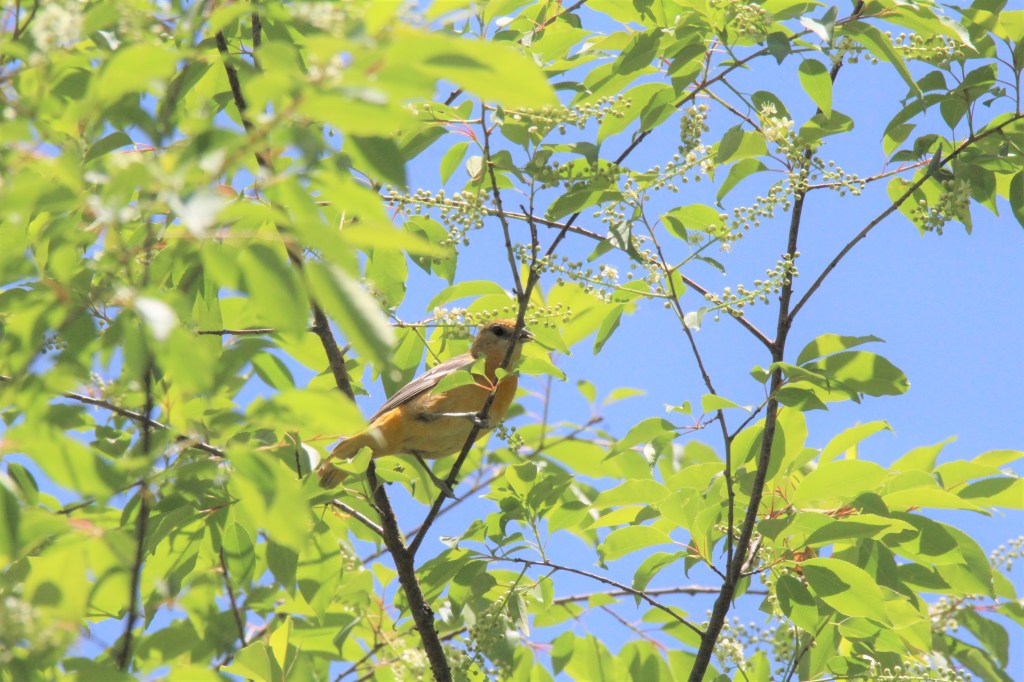
Monson
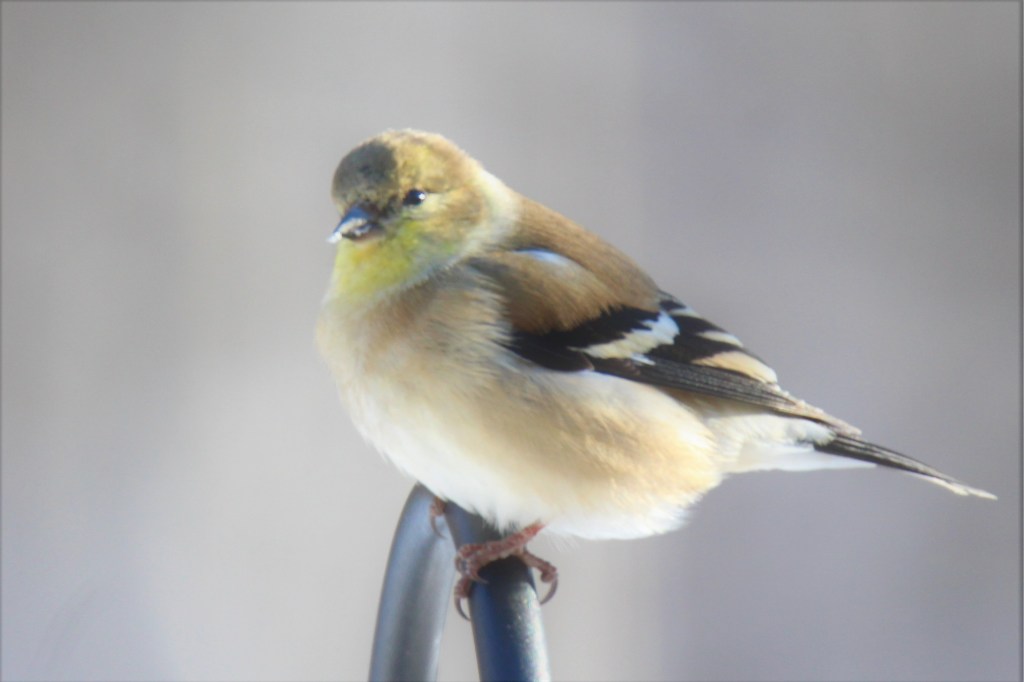
Wilbraham
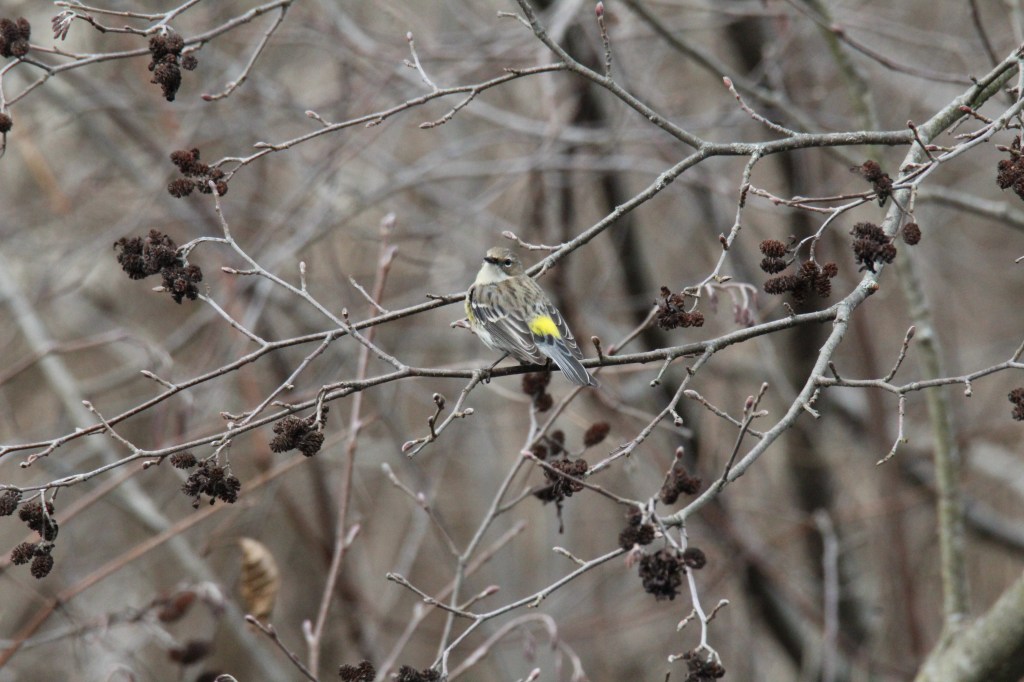
Wilbraham
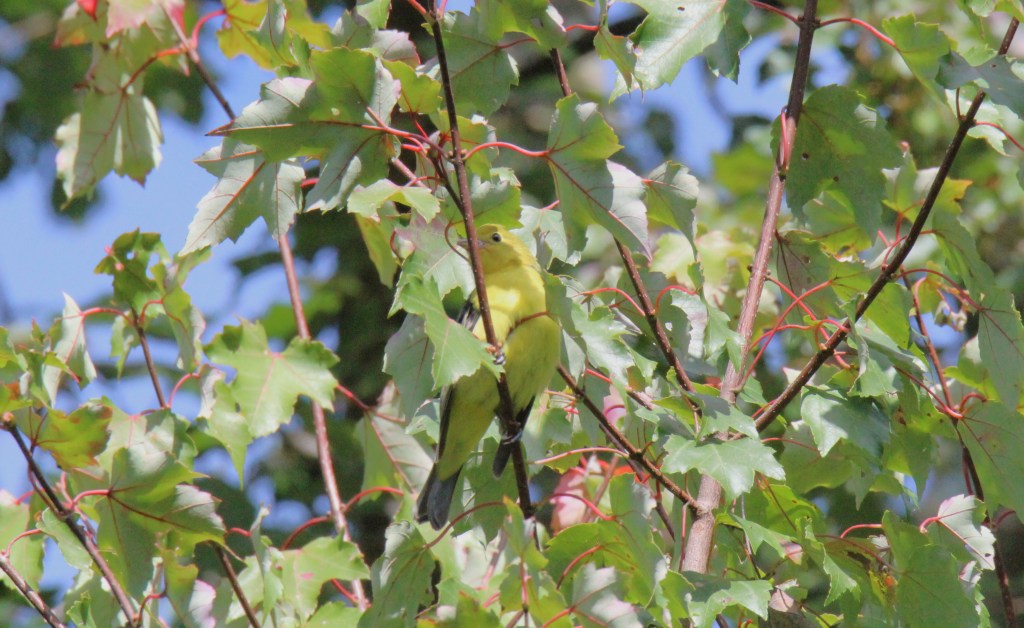
Wilbraham

Longmeadow
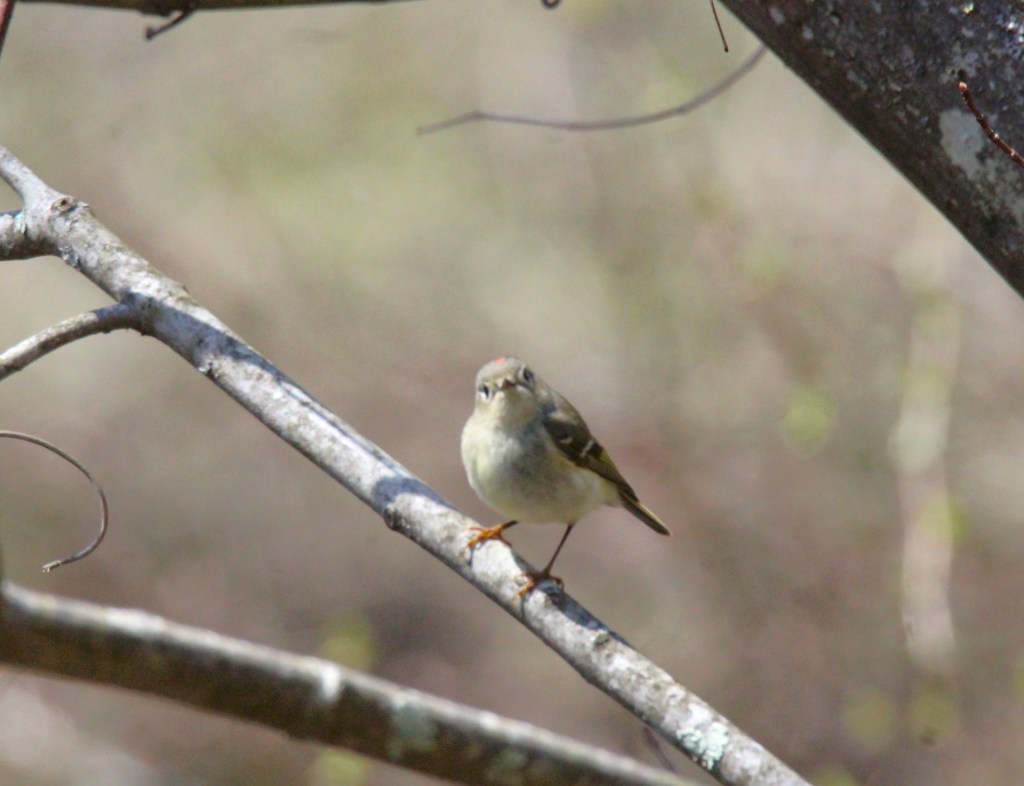
Hampden
Finally, how is my bird behaving? Warblers are notorious for creating challenges for poor people like me who only want to take their pictures! They are constantly flitting about near the tops of trees. Kinglets zoom around too but will rest and are often found lower in trees and even in shrubs. Vireos will rest in lower tree branches and Common Yellowthroats like thicket and shrubs. Goldfinches zig zag up and down through the air and will perch for long stretches. They will also visit your birdfeeders often to eat thistle and seeds. Pine Warblers and Yellow-rumped Warblers will visit feeders rarely too! Yellow-rumped and Palm Warblers will feed on the ground too which makes for easier viewing. Most warblers are shy though. I usually look for movement and then try to home in on what is moving.
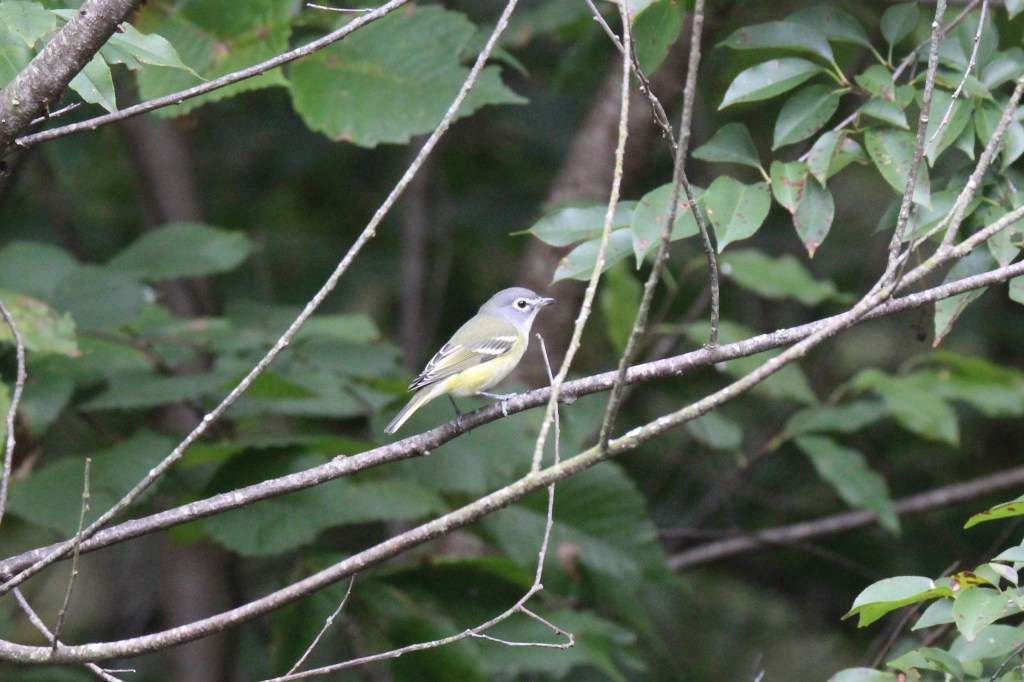
Wilbraham
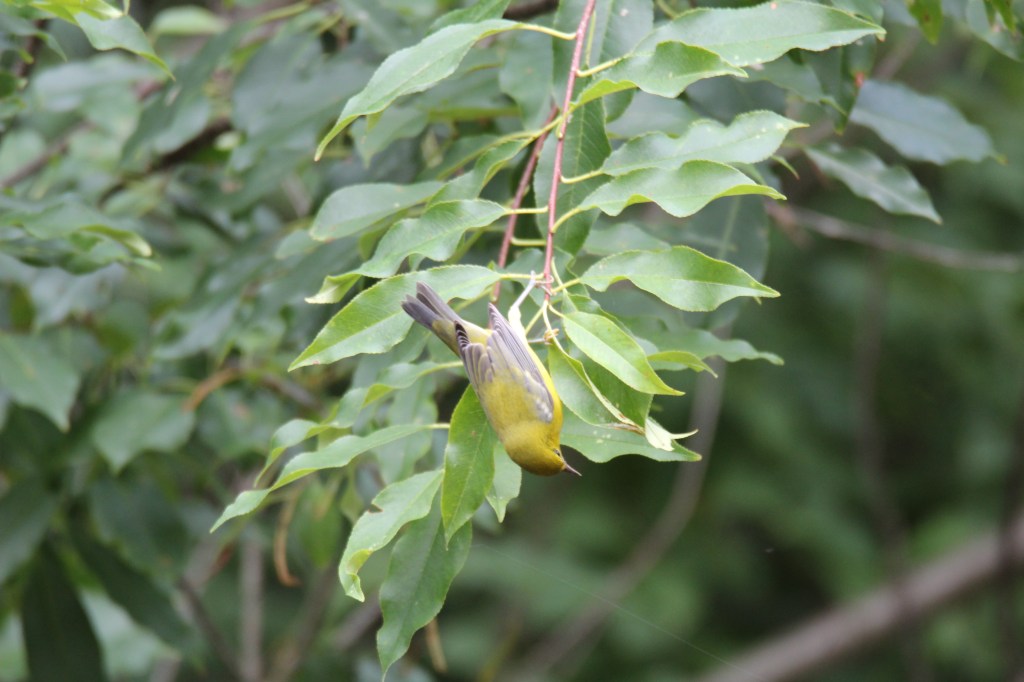
Wilbraham
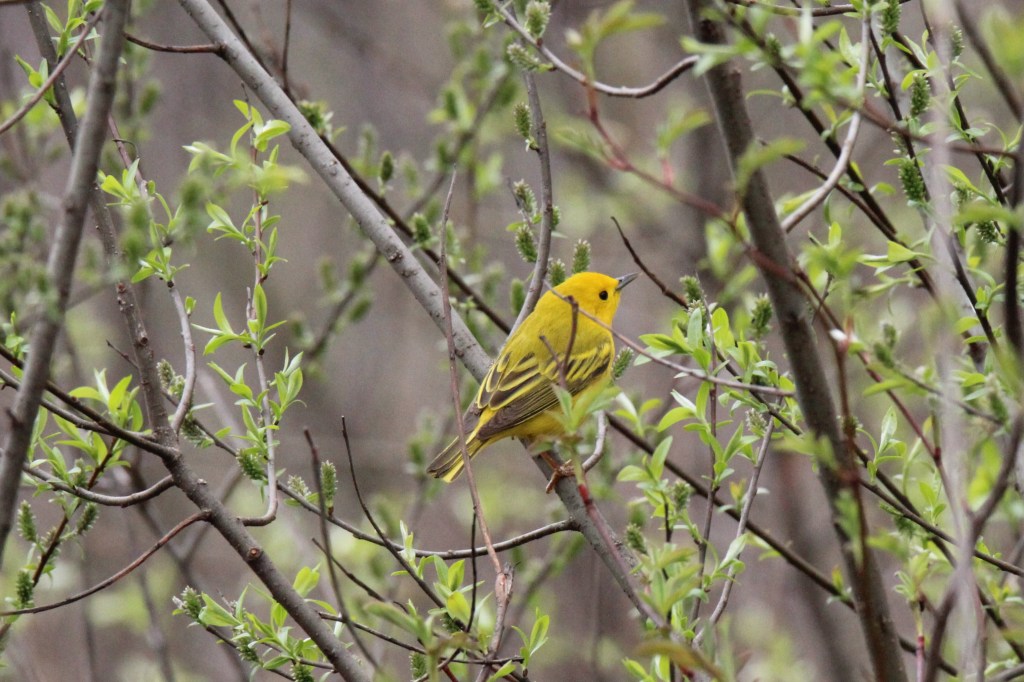
Monson
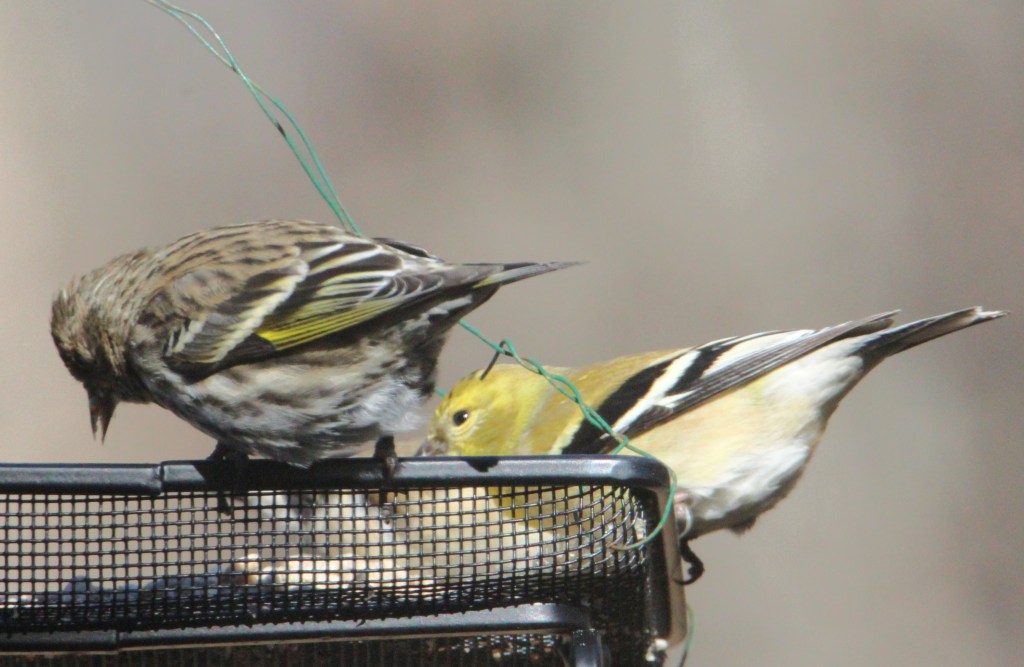
Wilbraham
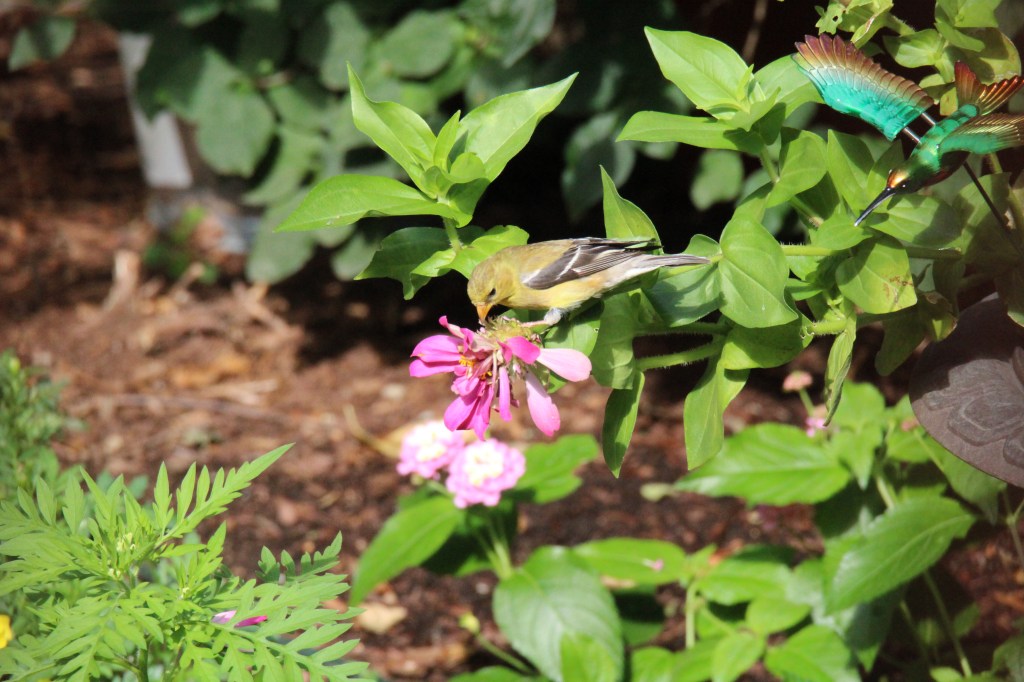
Wilbraham
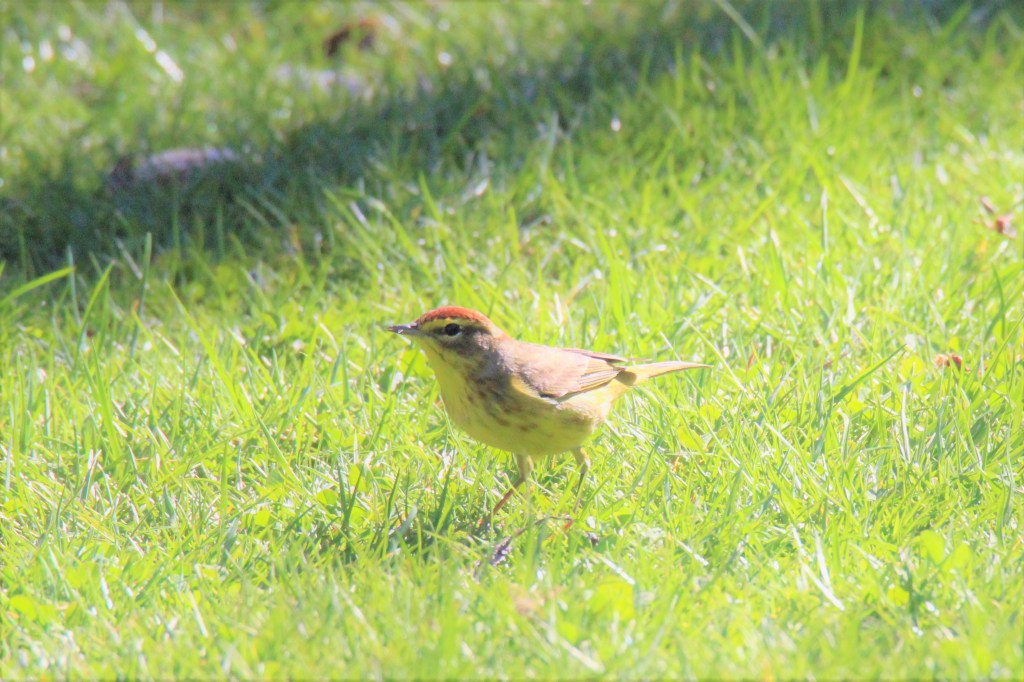
Springfield
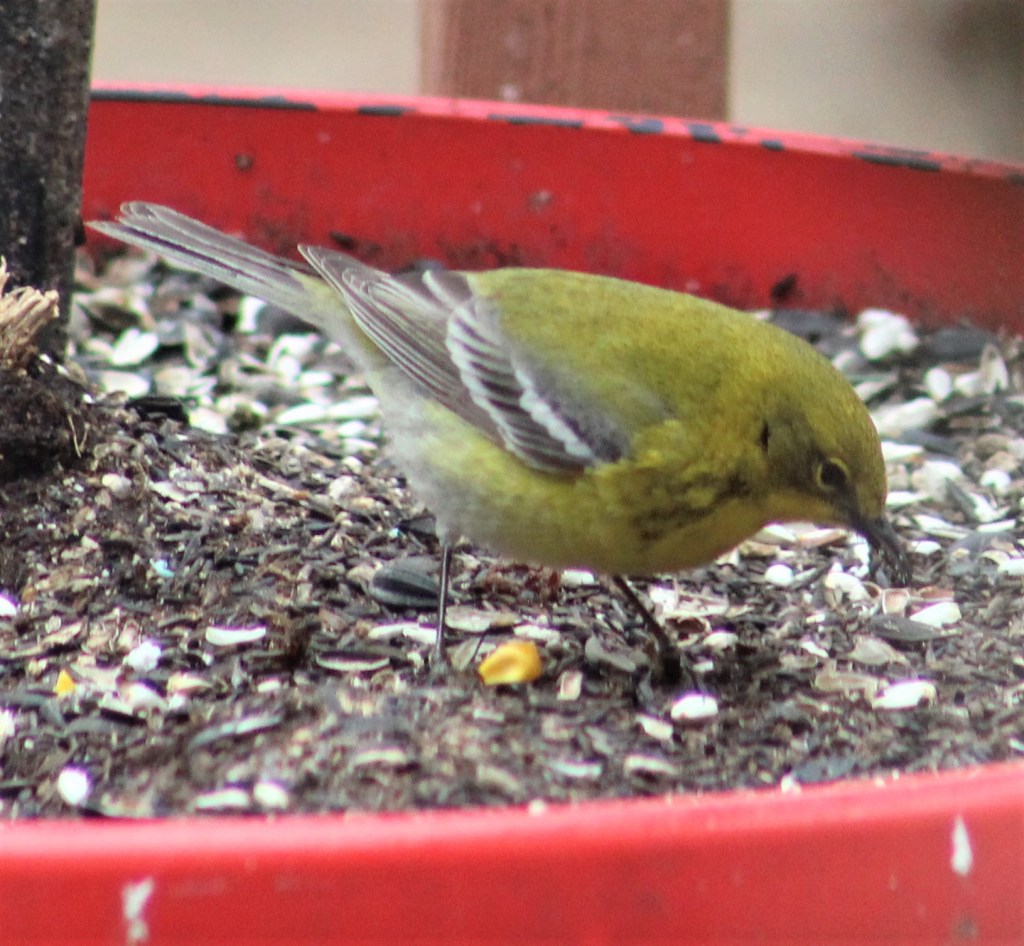
Wilbraham
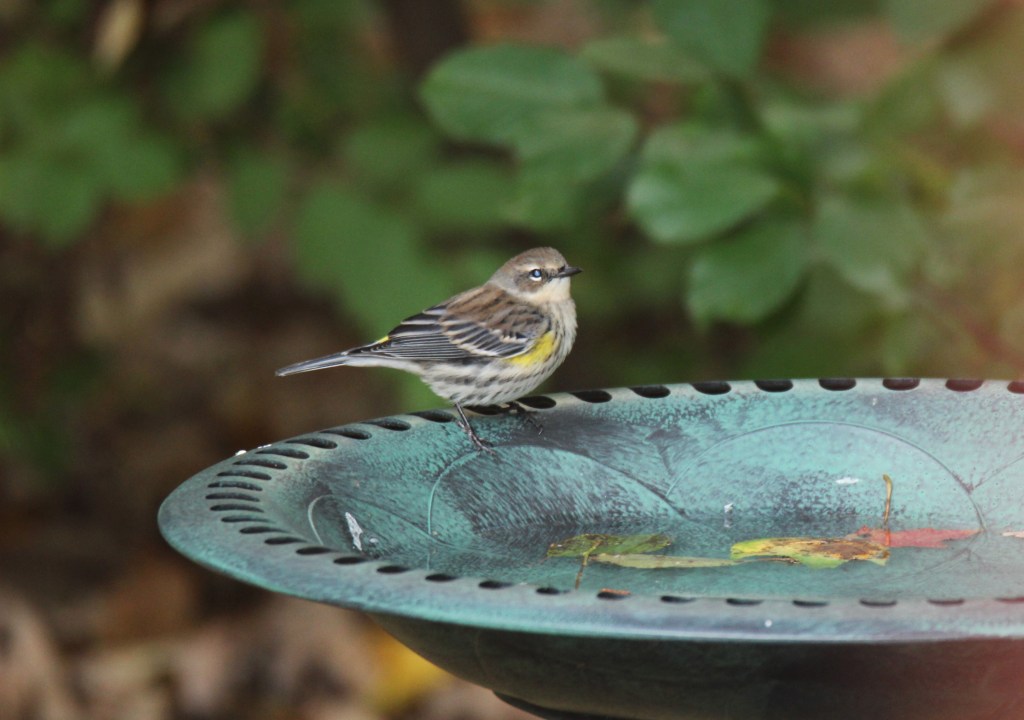
Wilbraham
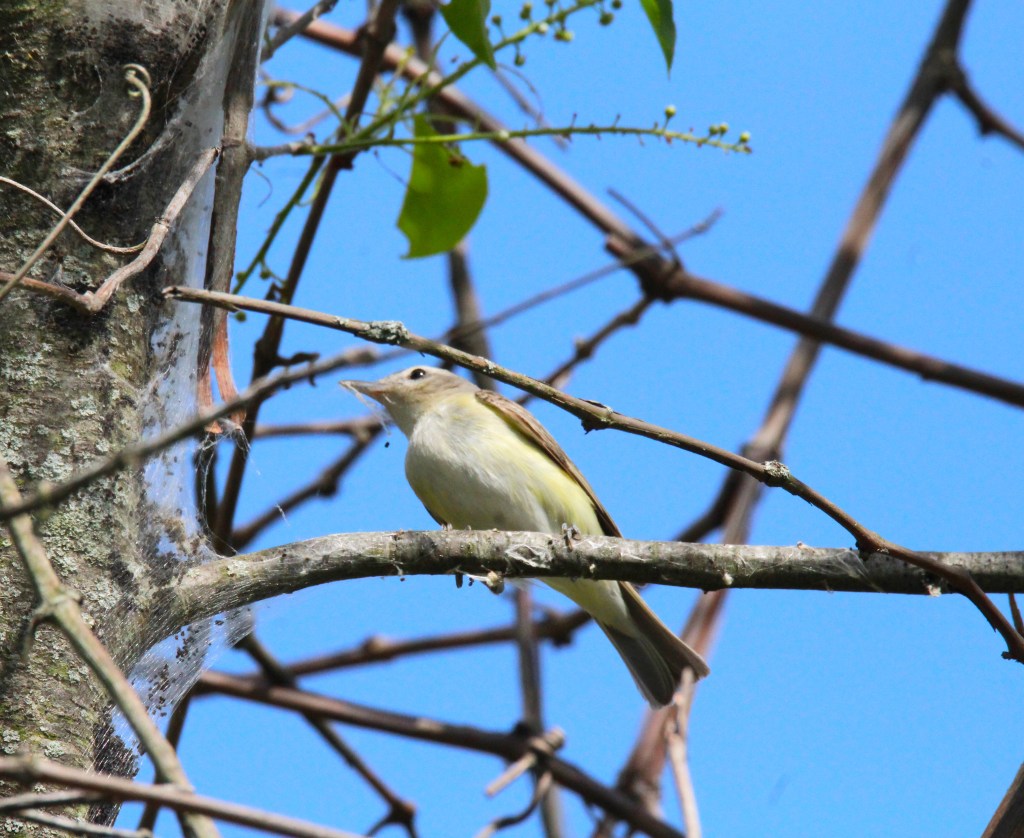
Longmeadow
Here is where sound helps too. Many times, I will hear a bird before I see it. I heard the Yellow Warbler below and watched for movement near the sound to get a photo. Too often, I hear a bird and can’t find it, which is frustrating. Merlin, the bird ID app is a valuable tool to help you find and ID the birds you are seeing and hearing. You must be careful though because it provides suggestions. It is up to you to use all the clues we talked about above to ID your bird correctly.
Well, that’s it for this week! Many of those birds in Texas now are heading our way. You can check out the Migration Dashboard and eBird to see what they are and get ready! I have LOTS of pictures and audio for many of them in my spring migration blogs from last week and from the last 2 years so check them out! I will also be sharing some photos of these birds hiding in the trees etc. on my Facebook and Instagram pages. This is often how you will see them in real-life birding so it can give you practice at identifying them! The links to the resources I talked about are on my site! Have fun out there because it doesn’t get better than spring migration for us bird-lovers! As ALWAYS, thanks to my followers and supporters. I treasure you. I am grateful for each LIKE and COMMENT I receive! Robin 😊
 Robin's Birds
I NEED to come lol!
LikeLike